Tanzania Mourns Prof. Geoffrey Mmari, a Distinguished Educator Who Shaped Three Public Universities
By Erca Kisoli, CMU
Tanzania has lost one of its distinguished educationists and institutional leaders, Prof. Geoffrey Raphael Vehaeli Mmari, whose career spanning more than half a century helped shape the country's higher education system, nurture generations of leaders and advance academic scholarship.
Prof. Mmari, who died on 11 October 2026 at the age of 92 at Muhimbili National Hospital in Dar es Salaam, leaves behind an exceptional record of service, having led three public universities as Vice Chancellor: the University of Dar es Salaam (UDSM), Sokoine University of Agriculture (SUA), and the Open University of Tanzania (OUT).
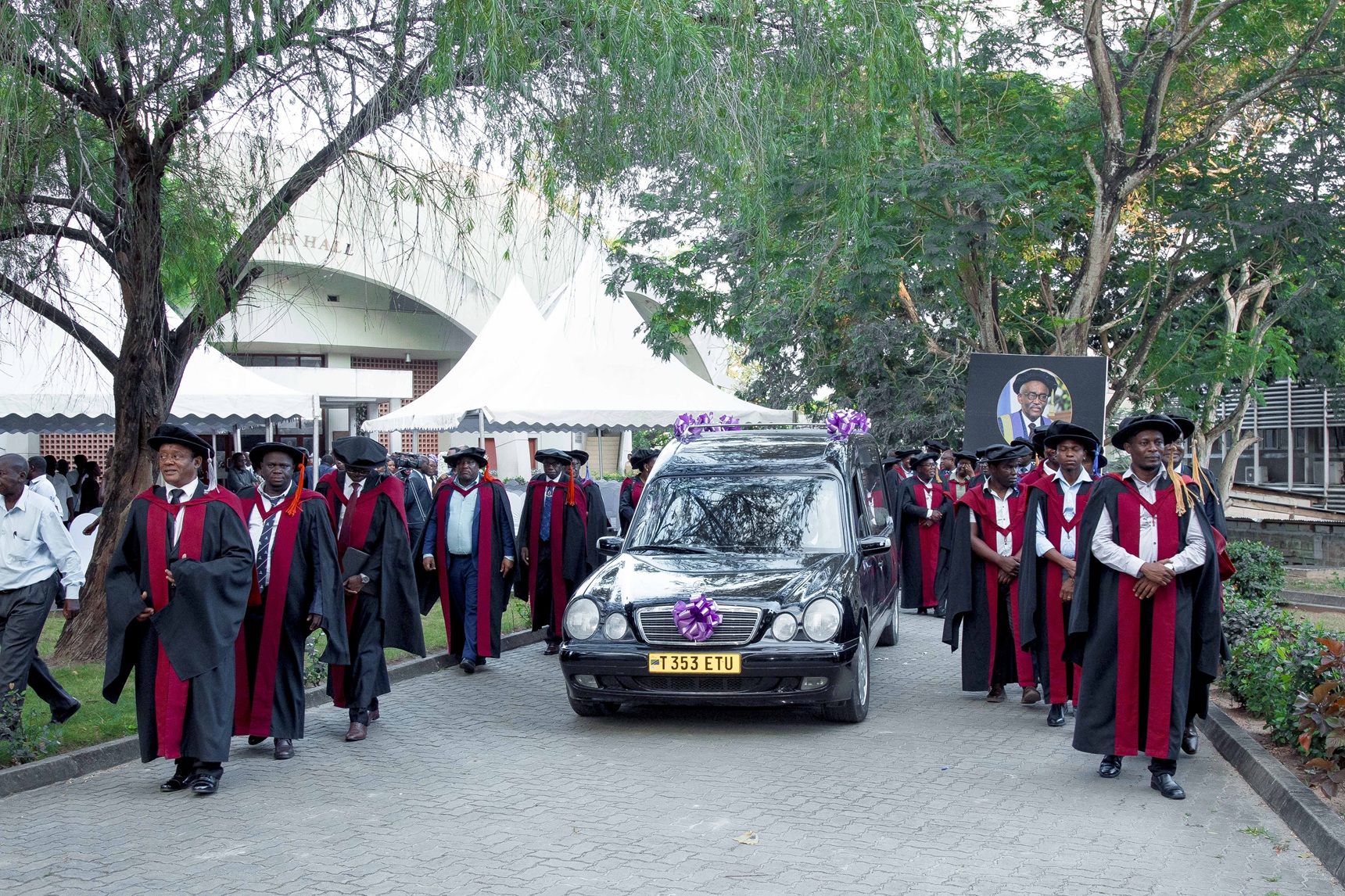
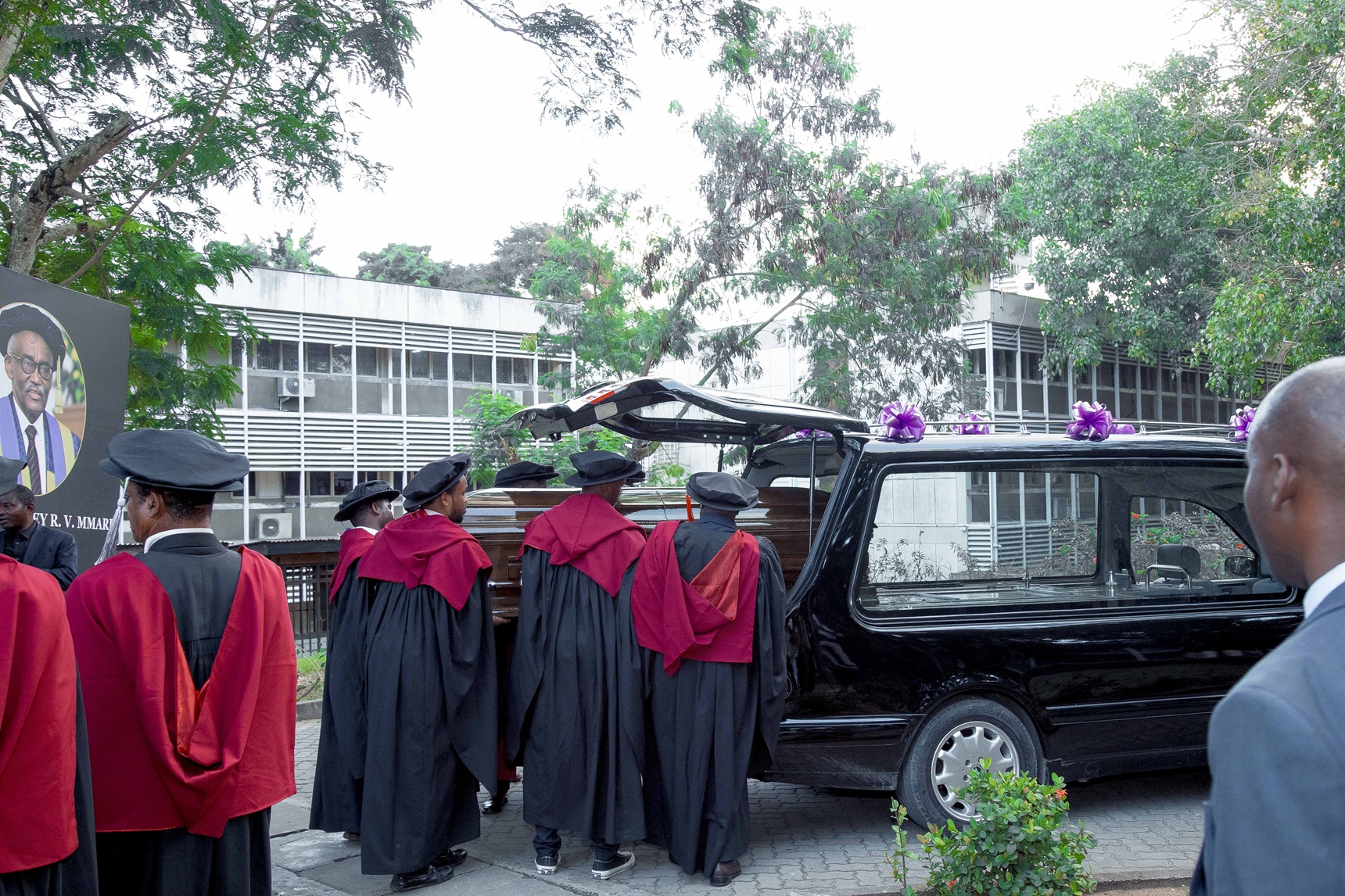
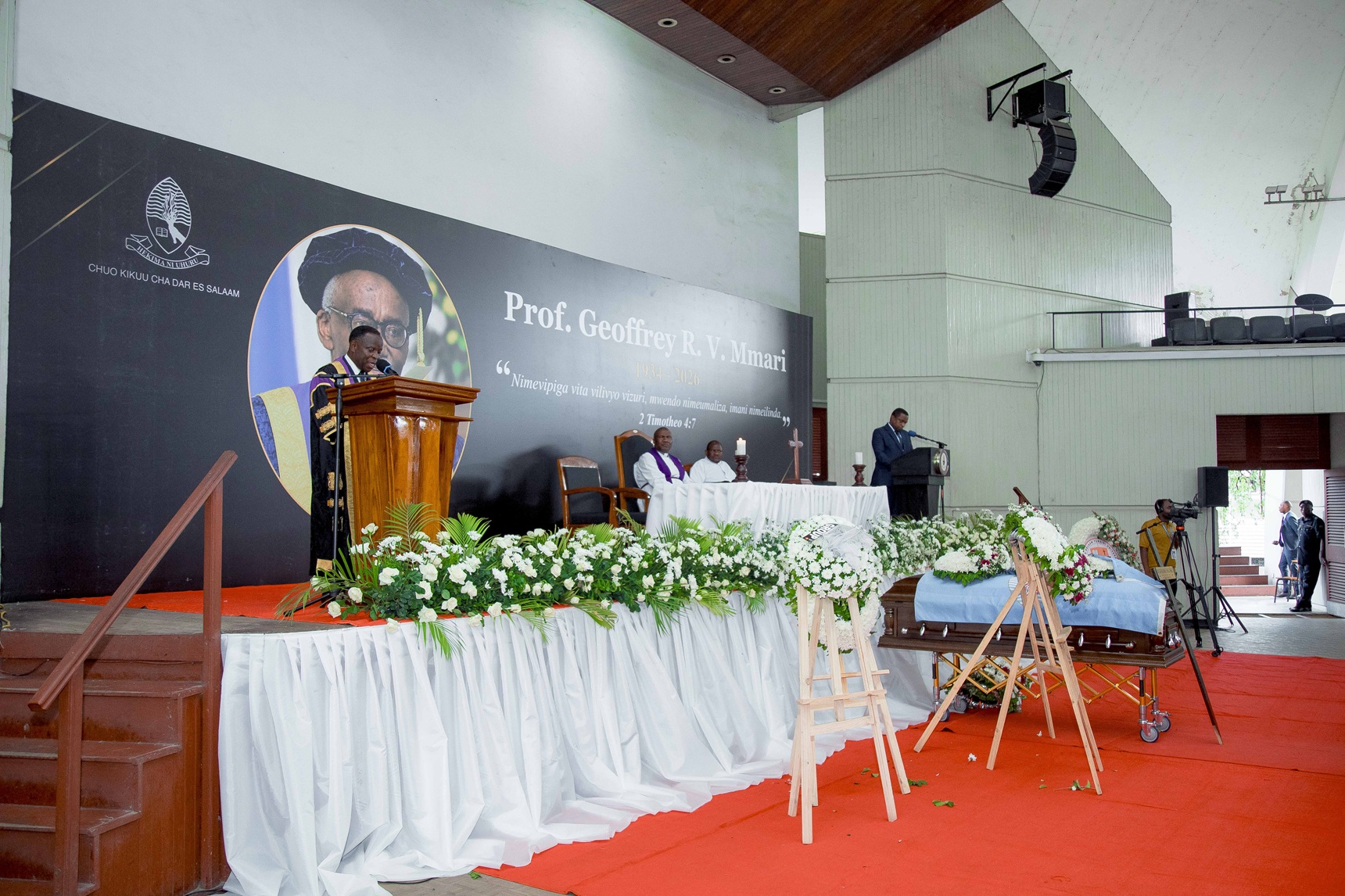
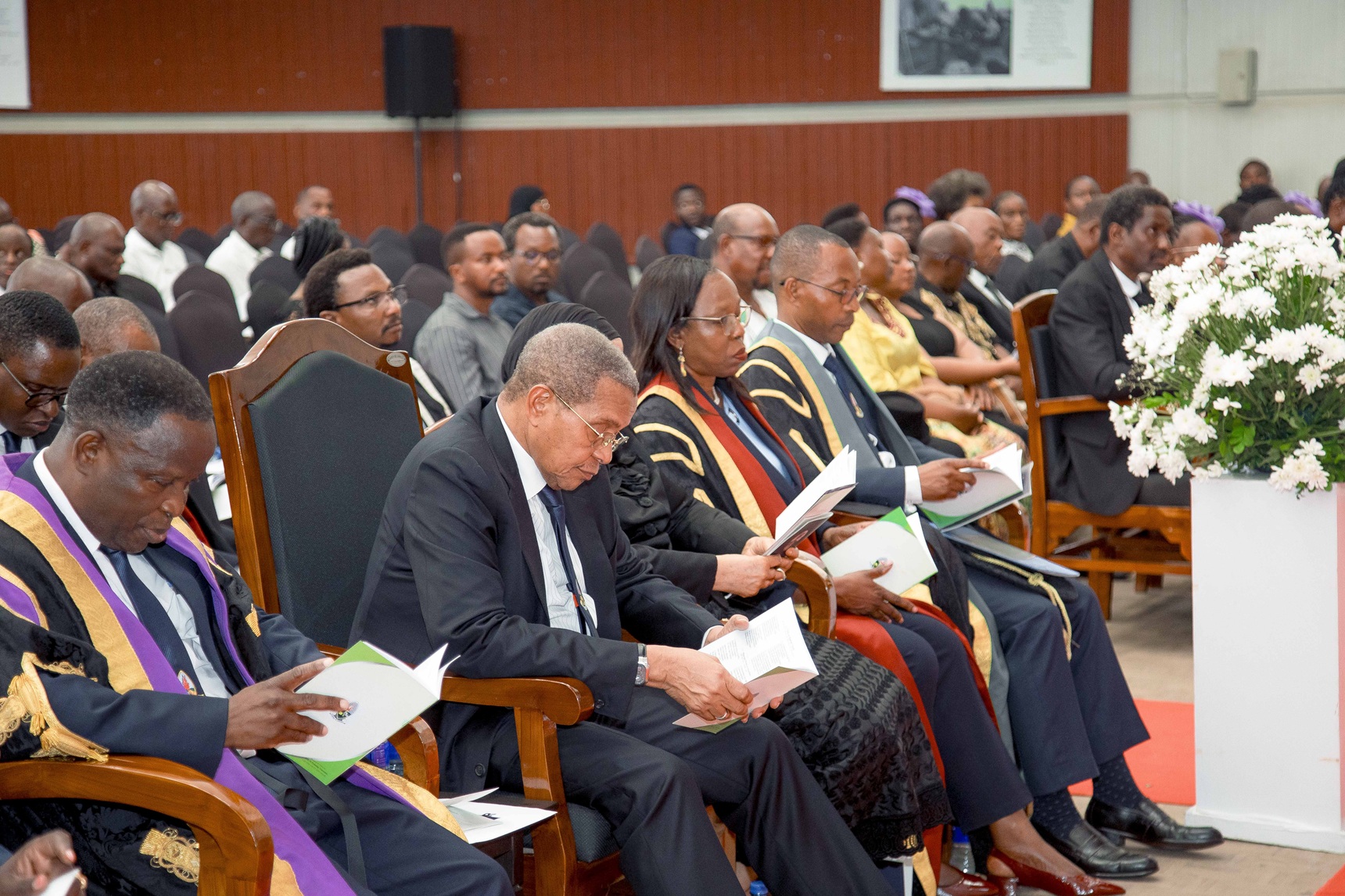
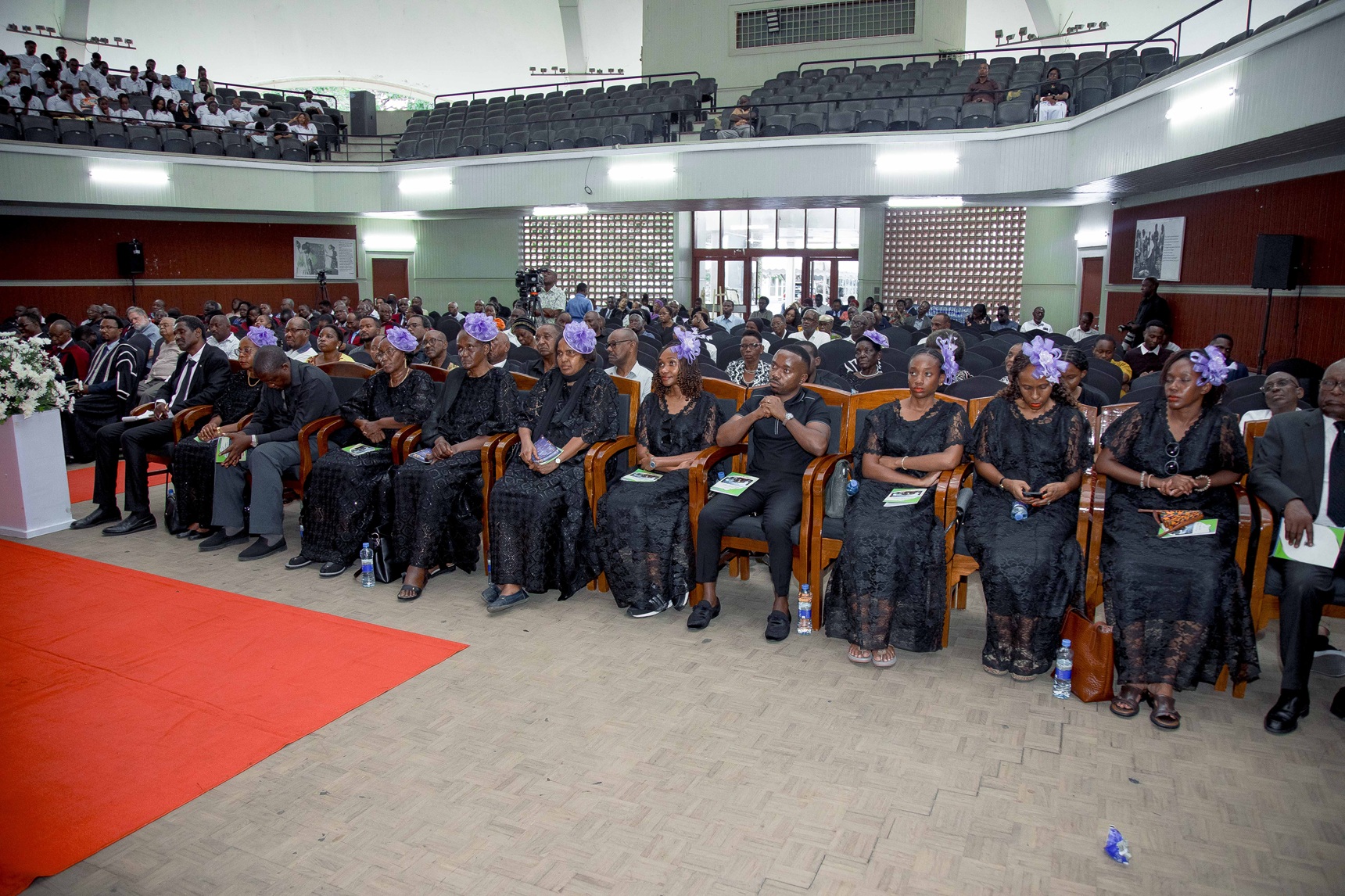
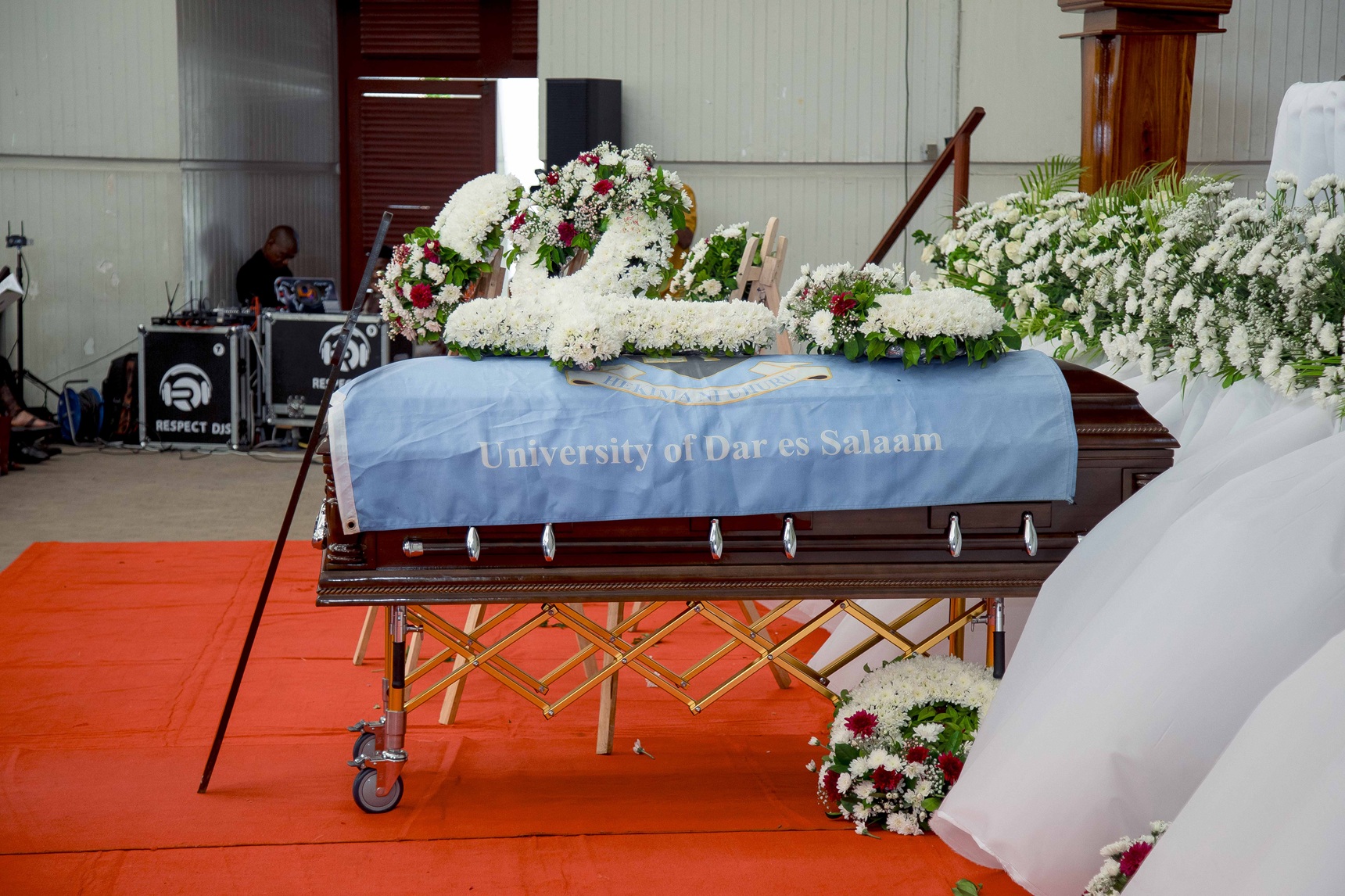
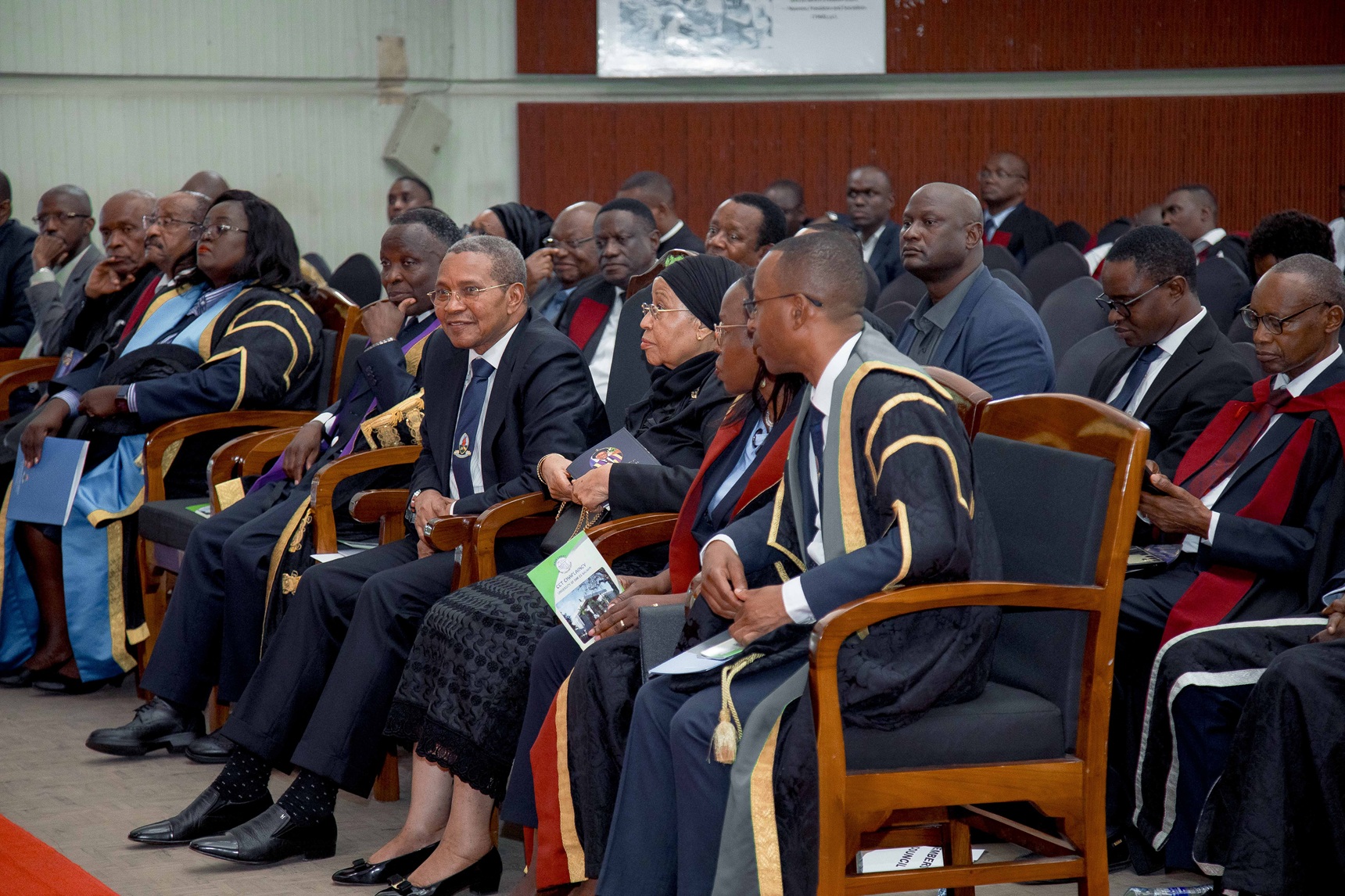
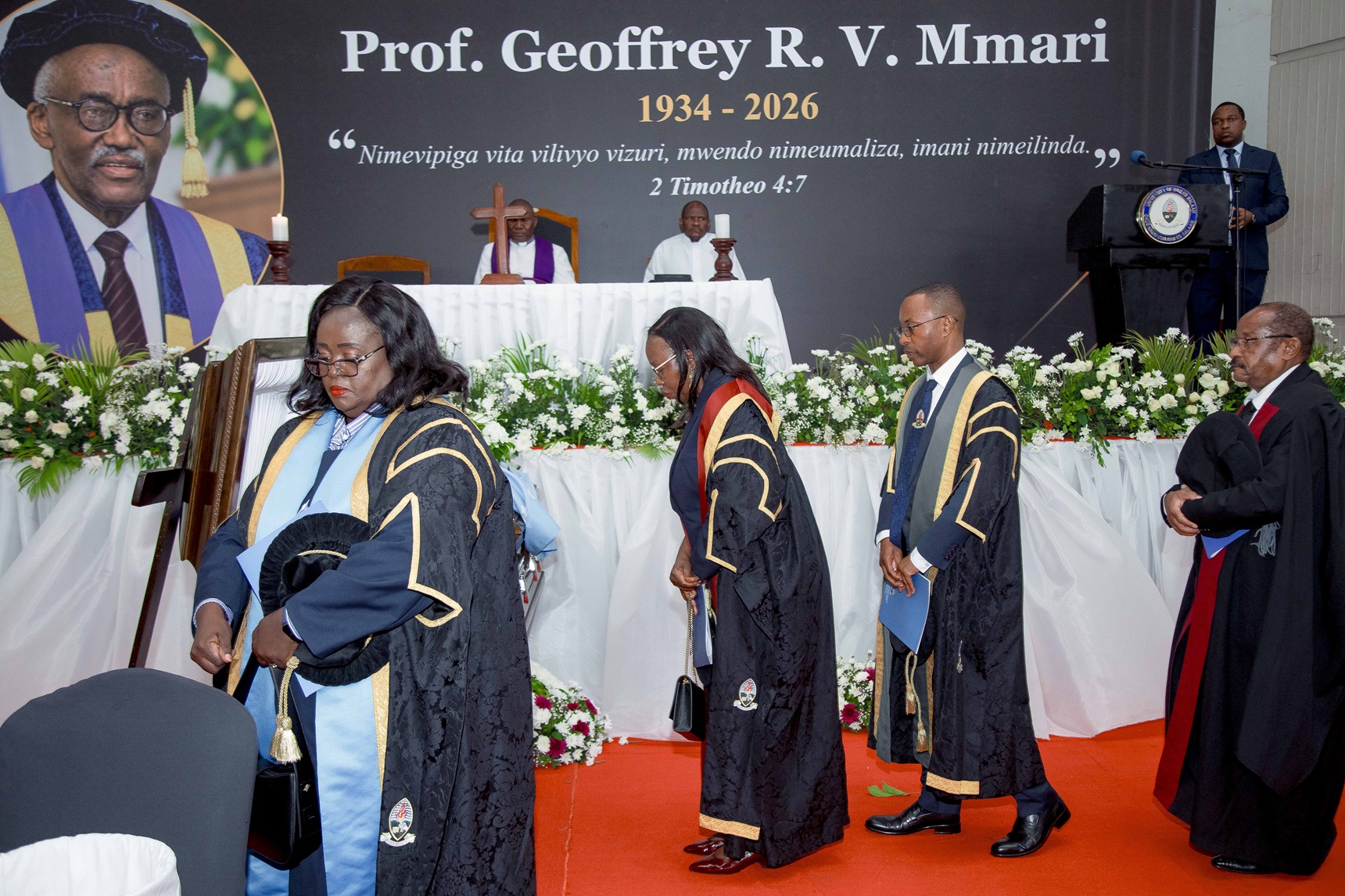
His life and contributions were commemorated during a funeral service at Nkrumah Hall, UDSM, on 13 October 2026, where Prof. Florens Luoga, a Professor of Law at UDSM and former Governor of the Bank of Tanzania, read the eulogy, reflecting on a man whose influence extended far beyond the institutions he led.
In the tribute, Professor Luoga described Prof. Mmari as an accomplished scholar, an outstanding and principled leader, and a role model whose life had enriched universities and the nation.
“Although we mourn this great loss, we can find comfort in reflecting on a life that remains a rare gift to each of us, to our universities and to our nation,” the eulogy stated, celebrating a legacy that continues through the institutions he served and the people he mentored.
Prof. Mmari's contribution to higher education was distinguished by his leadership of three public universities at different stages of their development.
Founding Vice Chancellor of two public universities
He became the founding Vice Chancellor of SUA in 1984, serving until 1988, when the institution was establishing its foundations as a fully fledged university. During his tenure, he helped guide its early institutional development, earning a reputation for careful deliberation and evidence-based decision-making.
According to the eulogy read by Prof. Luoga, Professor Mmari was meticulous in seeking adequate information before making decisions, a quality that informed his leadership and approach to institutional management.
In 1988, he returned to UDSM as Vice Chancellor, leading the University until 1991. His tenure came during a period when the institution continued consolidating its academic standards and national and international standing.
He was also remembered for handling matters involving students and staff with composure, particularly when difficult decisions required intervention at the highest level of University leadership.
His contribution to the sector continued in 1993, when he was appointed founding Vice Chancellor of OUT, a position he held until 2005. In this role, he helped advance open and distance learning, institutional collaboration and staff development, contributing to efforts to broaden the reach of higher education.
The significance of his work lay not only in the senior positions he occupied but also in the responsibility of helping institutions establish, strengthen and sustain their academic and administrative foundations.
Professor Luoga captured this aspect of his legacy in the eulogy, noting that Professor Mmari had left a gap while also producing leaders who would carry forward his example.
“He has left a gap, but he has also produced many leaders who will continue his example through their actions,” Professor Luoga said.
From SUA to UDSM and OUT, this legacy of institutional leadership remains among the most defining features of his public service.
From mathematics teacher to distinguished professor
Born on 24 June 1934 in Siha District, Kilimanjaro Region, Professor Mmari began his professional journey in the classroom, where mathematics and education became enduring themes of his career.
He received his primary education at Ilembula in present-day Njombe Region between 1940 and 1946 before proceeding to Ilboru Secondary School in Arusha and Tabora Secondary School. In 1953, he joined Makerere University, graduating with a Diploma in Education in 1956.
He began teaching in 1957 at Kahororo Secondary School in Bukoba, where he taught mathematics and Kiswahili. Between 1958 and 1962, he taught mathematics, physics, geography and Kiswahili at Ilboru Secondary School.
After further studies in the United States, he returned to teach mathematics at Tabora Secondary School in 1965 before moving to Shinyanga Secondary School in 1966, where he was appointed headteacher.
His academic ambitions took him to the University of Northern Iowa in the United States, where he earned a bachelor's degree in 1964 and a master's degree in 1965. He later pursued doctoral studies at UDSM, completing his PhD in 1975.
His professional development also included short-term academic training at Yale University, Iowa State University of Science and Technology, Manchester College of Education and the University of Ibadan in Nigeria.
Prof. Mmari joined UDSM in 1970 as a lecturer in the Institute of Education. His academic progression was rapid: he became Senior Lecturer in 1972, Associate Professor in 1975 and Professor in 1977.
In February 1980, he delivered his professorial inaugural lecture, titled Recent Trends in Mathematics Education. Published by Dar es Salaam University Press, the lecture was numbered 27 in UDSM's series of professorial inaugural lectures.
The lecture reflected his longstanding commitment to mathematics education, a field in which he combined teaching, scholarship, writing and professional leadership.
A scholar whose work reached beyond the classroom
Prof. Mmari's influence extended beyond university administration into research, academic publishing and the development of mathematics education in Tanzania.
He authored and edited mathematics textbooks for secondary schools and published more than 100 works, including over 50 articles in internationally respected journals. He was also an active member and former Chairperson of the Mathematical Association of Tanzania, contributing to the advancement of mathematics teaching and scholarship.
His intellectual interests extended into history and public affairs. In 1995, he co-edited, alongside Colin Legum, the book Mwalimu: The Influence of Nyerere, published in London by James Currey. He also served as an external examiner at the University of Nairobi.
His scholarship and dedication to professional excellence earned him recognition at UDSM, where he was named the University's best employee in 1982. The decision was communicated in a congratulatory letter from the then Vice Chancellor, the late Ambassador Nicholas Alfred Kuhanga.
These achievements illustrate a career that combined academic rigour with a commitment to sharing knowledge, strengthening educational practice and contributing to wider national conversations.
Beyond universities: Service to national institutions and the media
Prof. Mmari's leadership extended well beyond the higher education sector. Over the years, he chaired or served on the governing bodies of numerous national institutions.
They include the Higher Education Accreditation Council, the National Examinations Council of Tanzania, Tanzania National Parks, the National Board of Accountants and Auditors, the Moshi Co-operative College, the Tanzania School of Journalism and the national library services board.
He also served in university councils and other governing bodies, bringing his experience in academic leadership and institutional management to a wider range of public responsibilities.
In the media sector, he served as President of the Media Council of Tanzania (MCT) and later as Chairperson of its Board of Trustees, where he remained involved in governance for approximately 20 years until his death.
His service in these roles reflected the breadth of his interests and his commitment to institutions that contribute to education, professional standards and public life.
In recognition of his contributions, Prof. Mmari received several honours, including the Dr. Martin Luther King Drum Major for Justice Award in 2003. He was also awarded honorary doctorates by OUT and Kampala International University in Dar es Salaam.
In 2013, SUA conferred an honorary doctorate on him, making him the second recipient of that distinction in the University's history after the late Mwalimu Julius Kambarage Nyerere, who received the honour in 1997.
Remembered for building institutions and nurturing leaders
Tributes following his death have highlighted not only his academic achievements but also the lasting influence of his leadership on institutions and individuals.
UDSM Vice Chancellor Prof. William A. L. Anangisye expressed deep sorrow at his passing, recognising Professor Mmari as one of the distinguished academic leaders who contributed to the development of the University and Tanzania's wider higher education sector.
Prof. Anangisye extended condolences to the bereaved family and others affected by the loss, while underscoring the importance of preserving the academic values and leadership principles that Professor Mmari championed.
At Tumaini University Dar es Salaam College-TUDARCo (the current Dar es Salaam Tumaini University-DarTU, where Prof. Mmari served as Chancellor from 2005 to 2013, Vice Chancellor Professor Burton Mwamila acknowledged his contribution to the institution's development.
Among the contributions attributed to him were efforts associated with securing land for the institution and supporting its growth towards becoming a fully fledged university in 2024.
His role at TUDARCo added another dimension to a career characterised by service across public and private higher education institutions.
The tributes point to a recurring feature of Professor Mmari's career: his contribution was not confined to occupying leadership positions but extended to helping institutions grow and preparing others to carry forward their work.
Sustaining his passion for mathematics
Professor Mmari's commitment to education also found expression in his work with the Mathematical Association of Tanzania, where he served as Chairperson and supported efforts to promote mathematics education and student participation in competitions.
The Association's Chairperson, Dr. Said Sima, highlighted his commitment to mobilising resources to support these initiatives, including establishing a dedicated account for mathematics competitions.
Dr Sima also reported that the Association had secured a gold medal in an African mathematics competition for the first time, underscoring the importance of sustained efforts to nurture mathematical talent and academic excellence.
His involvement in mathematics education thus represents another part of his legacy: a commitment to creating opportunities for young people to develop their abilities and compete beyond their immediate learning environments.
A family man grounded in faith
Beyond his professional achievements, Prof. Mmari was a husband, father, grandfather and great-grandfather whose personal life was shaped by family and Christian faith.
He married Salome Jeremia Nkini in 1959, and together they had four children—one son and three daughters. He also leaves behind five grandchildren and one great-grandchild.
His Christian faith was a central part of his life from an early age. He was baptised in the Lutheran Church in Kilimanjaro Region on 3 September 1934 and received the sacrament of confirmation on 26 June 1948.
For more than five decades, he was a member of the Evangelical Lutheran Church in Tanzania, worshipping at Azania Front Parish in Dar es Salaam.
As family members, colleagues, former students and institutional leaders remember him, his life offers a portrait of a man whose professional accomplishments were grounded in a longstanding commitment to education, service and personal values.
An enduring legacy
Prof. Mmari died on 11 October 2026 at Muhimbili National Hospital in Dar es Salaam, following treatment at several hospitals. His death at the age of 92 marked the end of a life devoted to education and public service.
For UDSM, he will be remembered as a scholar who rose through its academic ranks, served as Vice Chancellor and continued contributing to university governance after his tenure. For Tanzania's higher education sector, his leadership across three public universities represents a remarkable chapter in the development of its institutions.
His legacy also lives on through his scholarship, his contribution to mathematics education, his service to national institutions and the generations of leaders he helped nurture.
The tribute delivered by Prof. Luoga at Nkrumah Hall offered a fitting reflection on the significance of his life: although his passing leaves a profound gap, the institutions he helped build and the people he influenced provide a lasting testament to his service.
Prof. Mmari's life ultimately demonstrates that the enduring measure of an educator and leader lies not only in the offices held or honours received, but also in the knowledge shared, the institutions strengthened and the people empowered to continue the work.
His legacy remains a reminder that building education is also about building people, institutions and a future that extends well beyond one's lifetime.