Advancing Intellectual Diplomacy Positions Universities at the Centre of African Integration
By Jackson Isdory, CMU
African universities are increasingly emerging as strategic platforms for continental integration, knowledge diplomacy, and policy influence, positioning higher education at the drivers of Africa’s integration and sustainable development agenda.
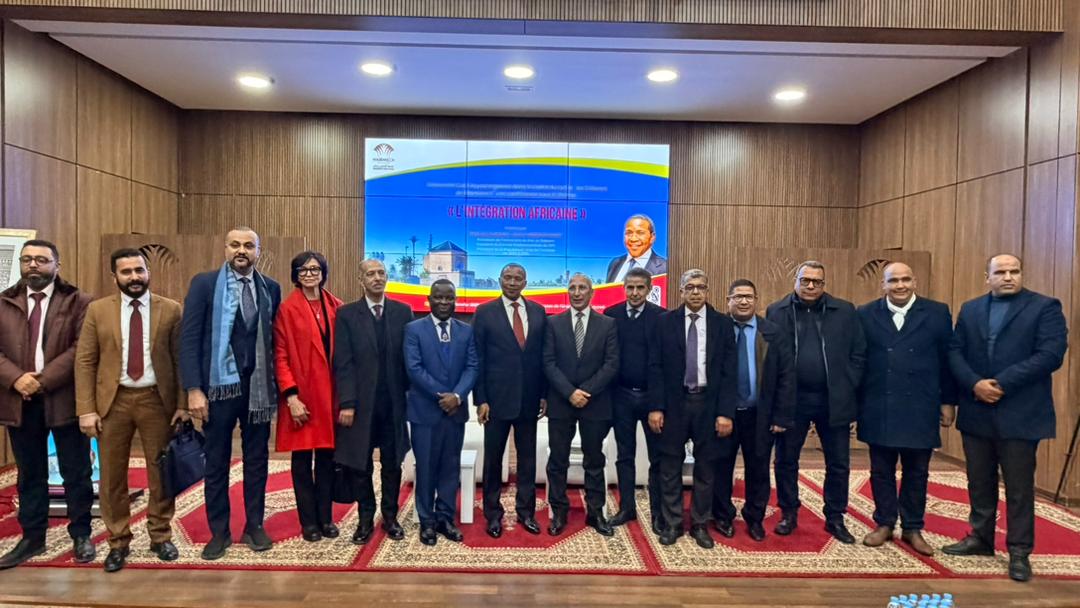
This was underscored during a high-level academic mission involving the University of Dar es Salaam (UDSM) and leading Moroccan universities held recently, where intellectual cooperation was framed as a critical lever for Africa’s integration trajectory.
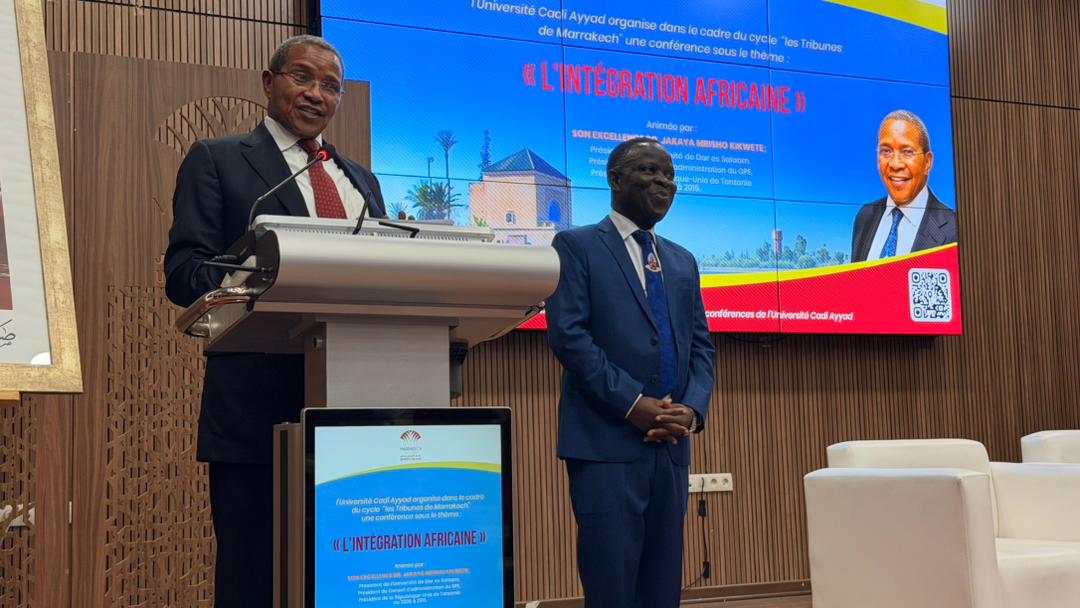
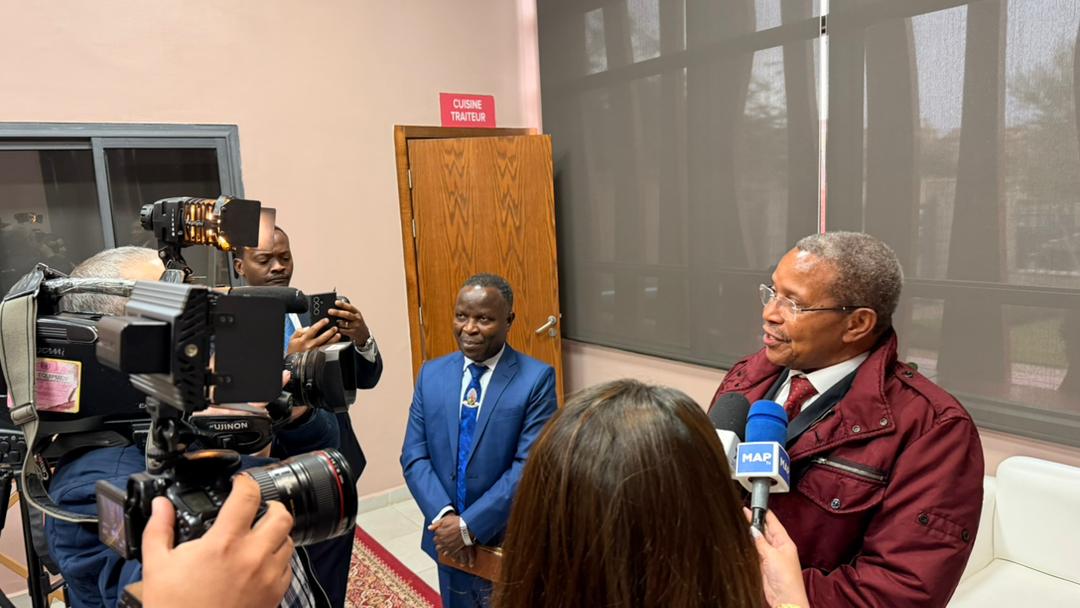
A central highlight of the mission was the UDSM and former President of the United Republic of Tanzania, H.E. Dr. Jakaya Mrisho Kikwete’s delivery of a Public Lecture at Mohammed V University of Rabat, Faculty of Legal, Economic and Social Sciences – Agdal, under “The Tribunes of Marrakech” forum.
Addressing scholars, high level policymakers, and students, Dr. Kikwete presented a thought-leadership discourse titled “African Integration: From Regions to a Continental Destiny,” framing African integration as both an institutional and people-driven process, anchored in knowledge, leadership, and shared intellectual capital.
The Chancellor emphasized that Africa’s integration project will ultimately be sustained by ideas, institutions, and people rather than protocols alone.
“Universities are the engines of African integration because they shape how Africans understand themselves, one another, and their shared destiny. By integrating knowledge before markets and citizens before structures, higher education institutions transform regional cooperation into continental consciousness”, Chancellor Kikwete noted.
He stressed that sustainable continental unity will be built through academic mobility, collaborative research, and shared intellectual capital.
He observed that while Africa has made notable progress through regional economic communities and initiatives such as the African Continental Free Trade Area (AfCFTA), the deeper consolidation of integration depends on people-centred approaches anchored in education, research, and intellectual exchange.
“Universities provide the neutral and credible spaces where African solutions can be generated, debated, and advanced with long-term vision”, he said.
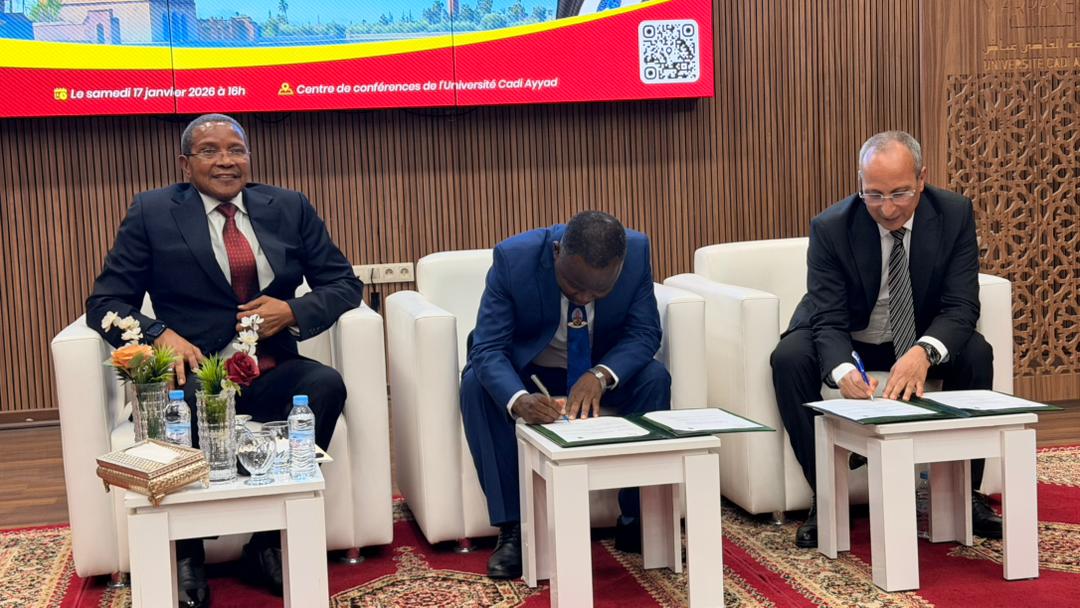
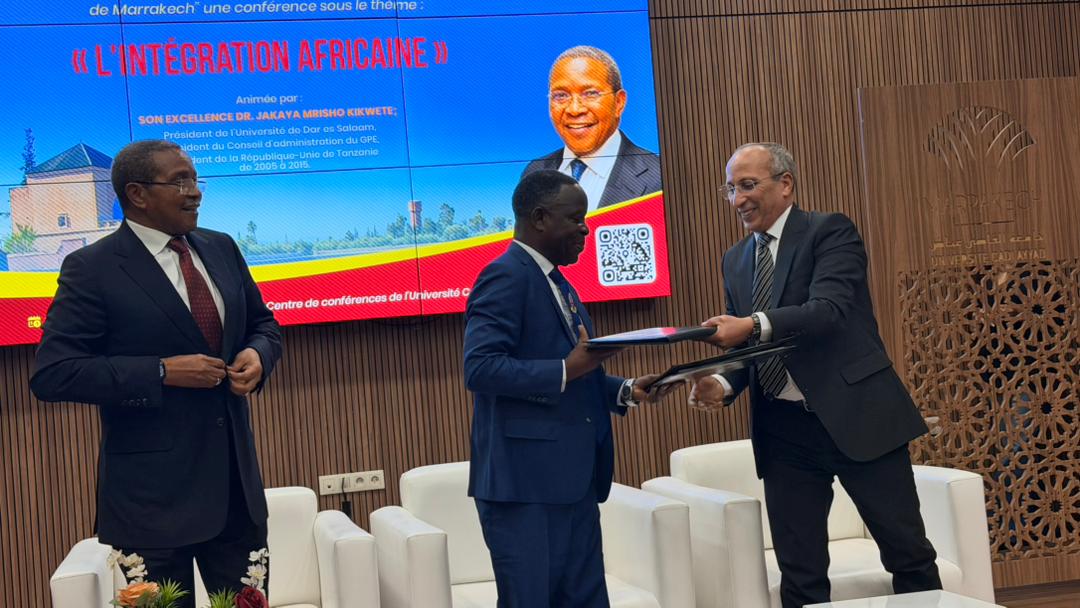
Formalizing partnerships: UDSM and Cadi Ayyad University sign strategic MoU
H.E. Kikwete’s perspective is practically reinforced through expanding academic partnerships between UDSM and Moroccan institutions, including Mohammed V University of Rabat and Cadi Ayyad University. These collaborations are strategically aligned with disciplines central to governance, economic transformation, public policy, and social development, areas that directly underpin Africa’s integration agenda.
The Vice Chancellor of UDSM, Prof. William A. L. Anangisye, reaffirmed the University’s deliberate shift toward positioning internationalization as a strategic instrument for impact.
“Our partnerships are not symbolic. They are structured to deliver postgraduate training, joint research, staff mobility, and co-publication that speak directly to Africa’s development priorities. Through intellectual diplomacy, UDSM is strengthening its role as a continental hub for leadership formation, policy-relevant research, and innovation,” said Prof. Anangisye.
He added that UDSM’s Research and Innovation Strategic Plan, including the establishment of a University Innovation Centre, is designed to connect academic knowledge with policy, industry, and societal needs, thereby reinforcing the University’s regional and international relevance.
On the Moroccan side, the President of Cadi Ayyad University, Prof. Blaïd Bougadir, described university-to-university cooperation as a mature and forward-looking form of diplomacy that complements state-level relations.
Prof. Bougadir noted, “Academic partnerships allow Africa to integrate through trust, shared inquiry, and co-creation of knowledge. When our universities collaborate, we are investing in a common intellectual infrastructure that supports sustainable development, innovation, and cultural understanding across the continent.”
He affirmed that the formal cooperation framework between Cadi Ayyad University and UDSM creates an enabling platform for joint research projects, student and staff exchanges, and cultural programmes that reinforce Pan-African values and South–South cooperation.
From an implementation and coordination perspective, the Director of the Directorate of Internationalization, Convocation and Advancement at UDSM, Dr. Augustina Alexander, emphasized that structured governance of partnerships is essential to translating vision into measurable outcomes.
“Internationalization at UDSM is guided by clarity of purpose and accountability. So, our role is to ensure that agreements are operationalized, progress is monitored, and collaborations deliver tangible academic, research, and societal value,” Dr. Alexander stated.
She added that, “partnerships with Moroccan universities strengthen UDSM’s global footprint while deepening Africa-to-Africa academic mobility, joint supervision of postgraduate programmes, and co-development of knowledge in areas such as governance, economics, innovation, and cultural heritage”.
Collectively, the engagements in Morocco illustrated how universities are assuming a more assertive role in Africa’s integration architecture, serving as incubators of ideas, conveners of dialogue, and catalysts for regional and continental coherence. As Africa navigates complex global dynamics, intellectual diplomacy anchored in higher education is increasingly being recognized as a strategic asset.
The mission reinforces UDSM’s positioning as a proactive continental actor, leveraging intellectual leadership, strategic partnerships, and institutional credibility to advance Africa’s integration agenda. Through sustained academic diplomacy and structured collaboration, UDSM continues to translate this vision into concrete institutional action.