

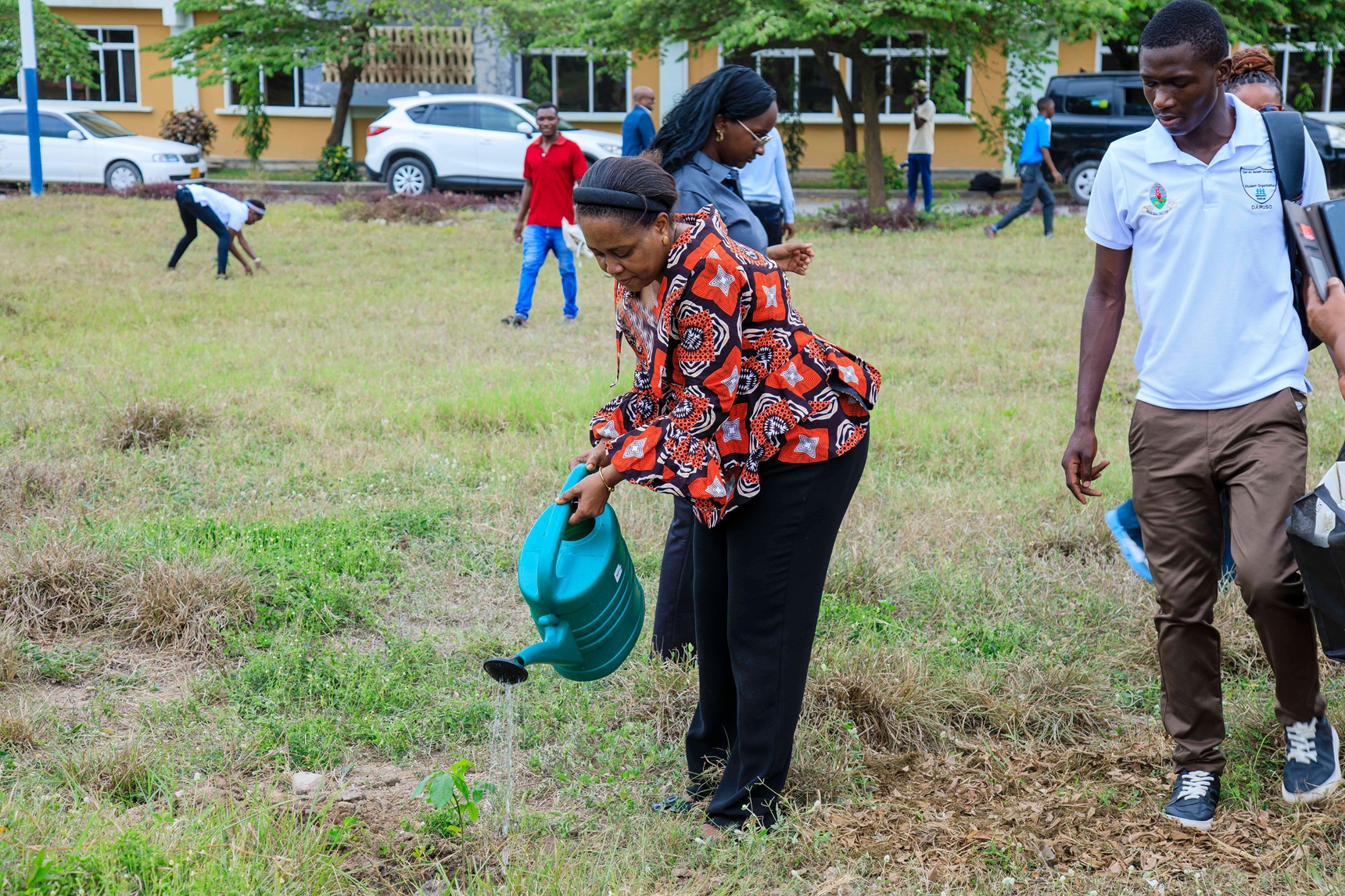
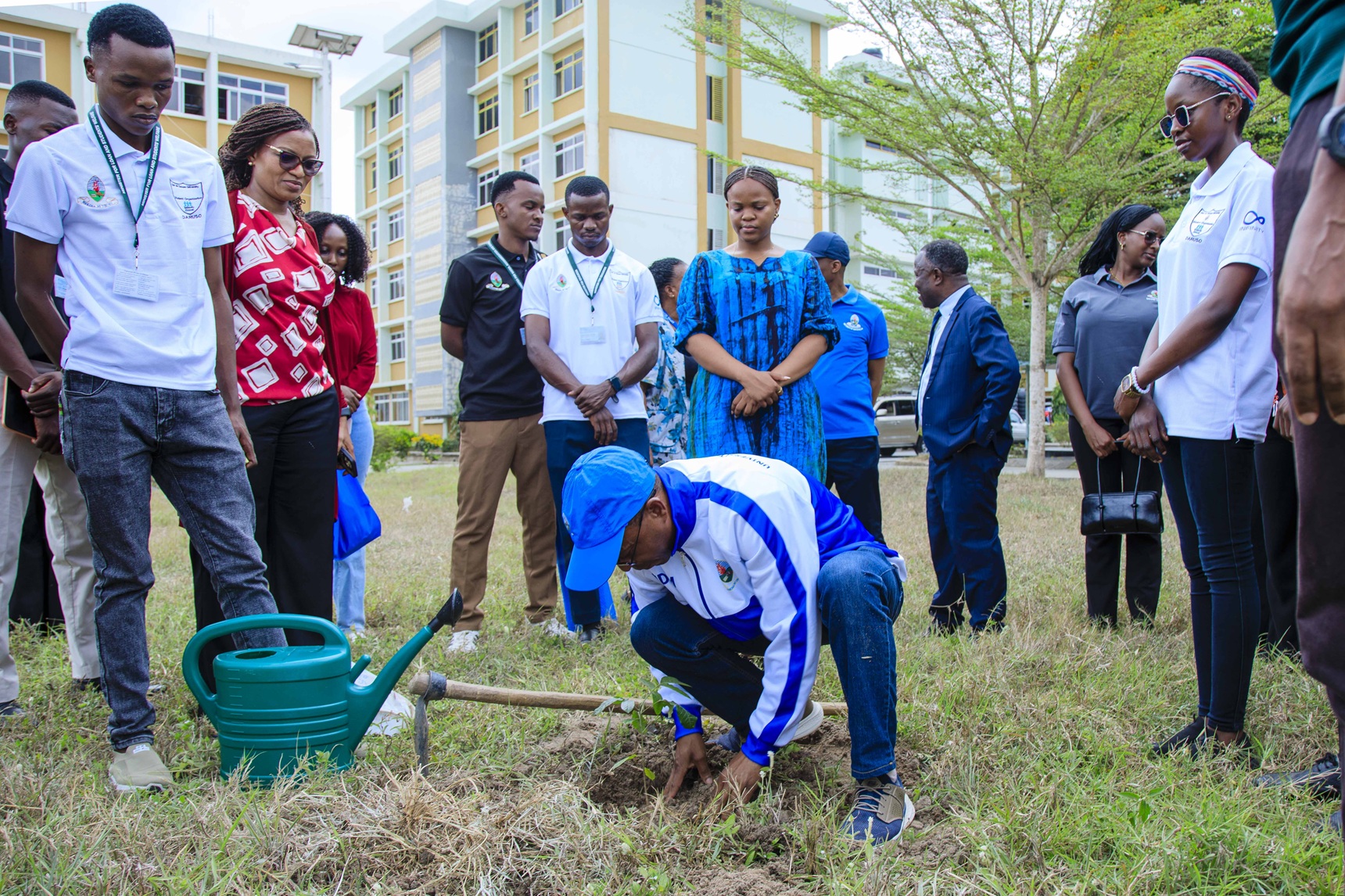
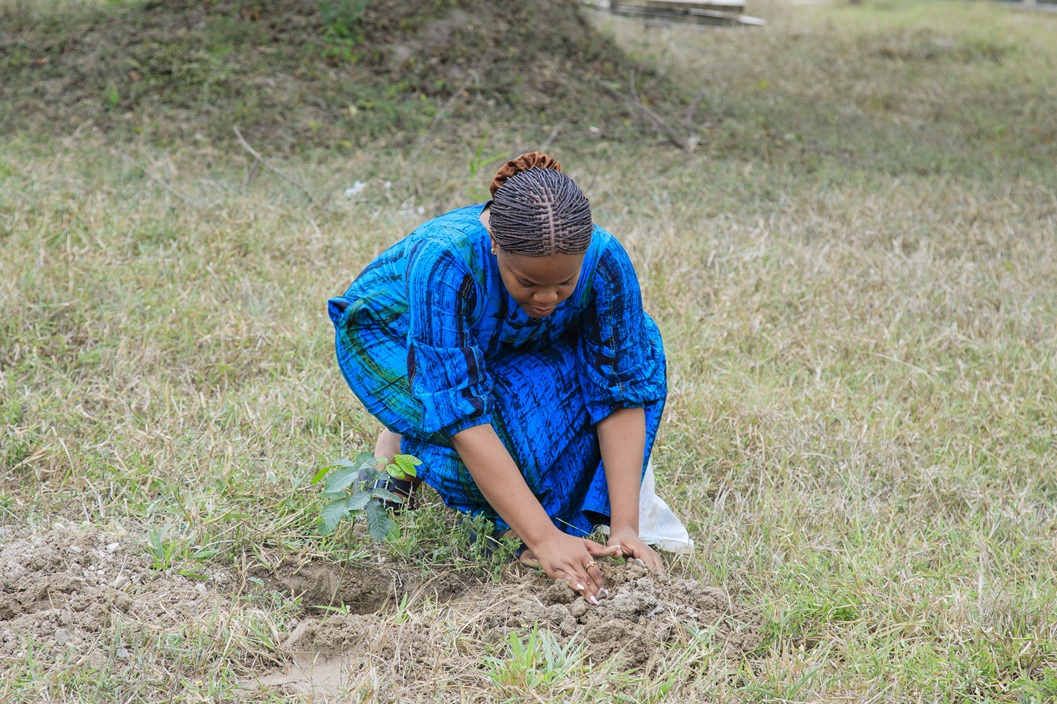
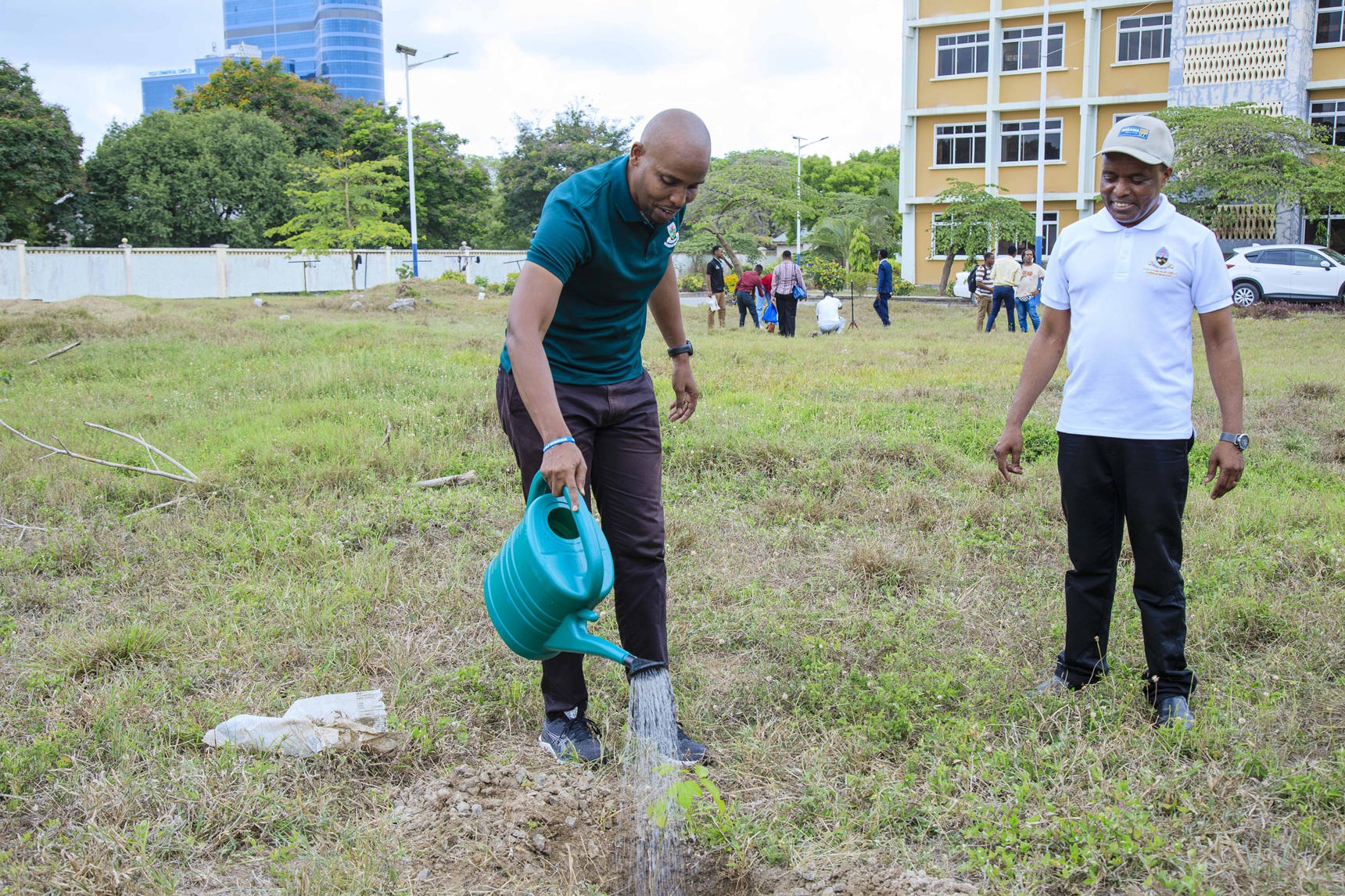
UDSM@65: Planting Trees Today to Sustain a Greener Campus for Future Generations
By Erca Kisoli, CMU
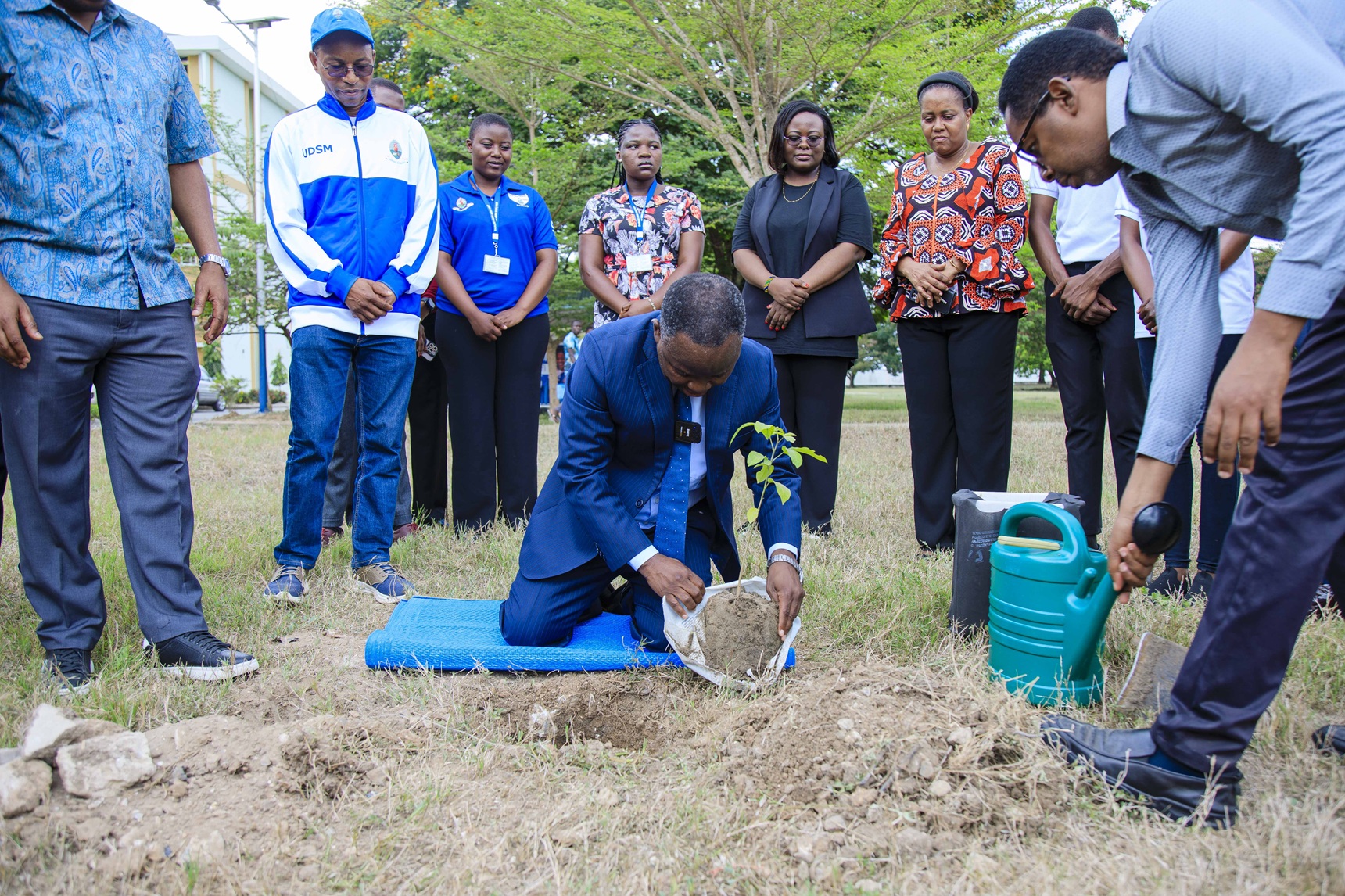
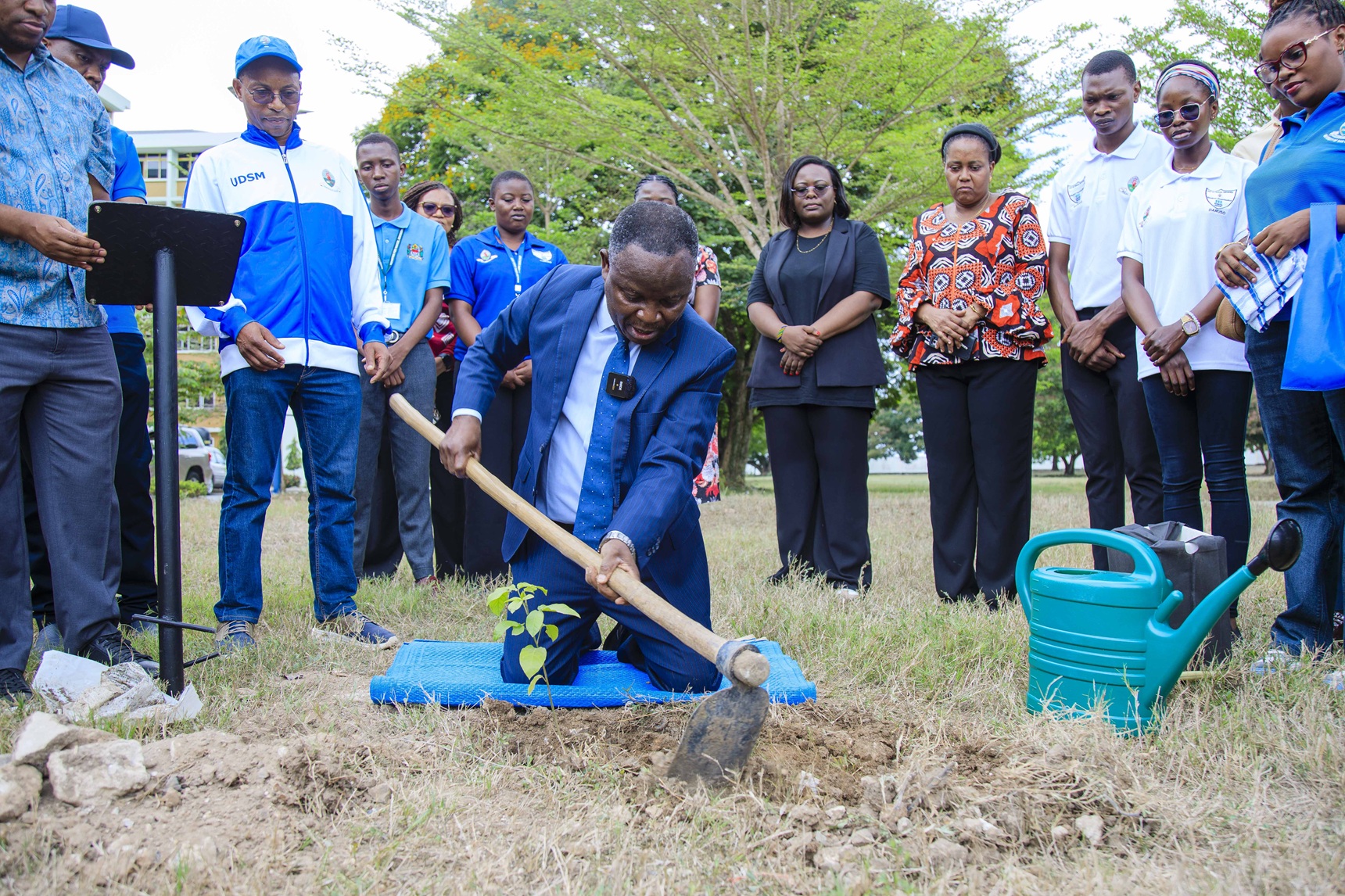
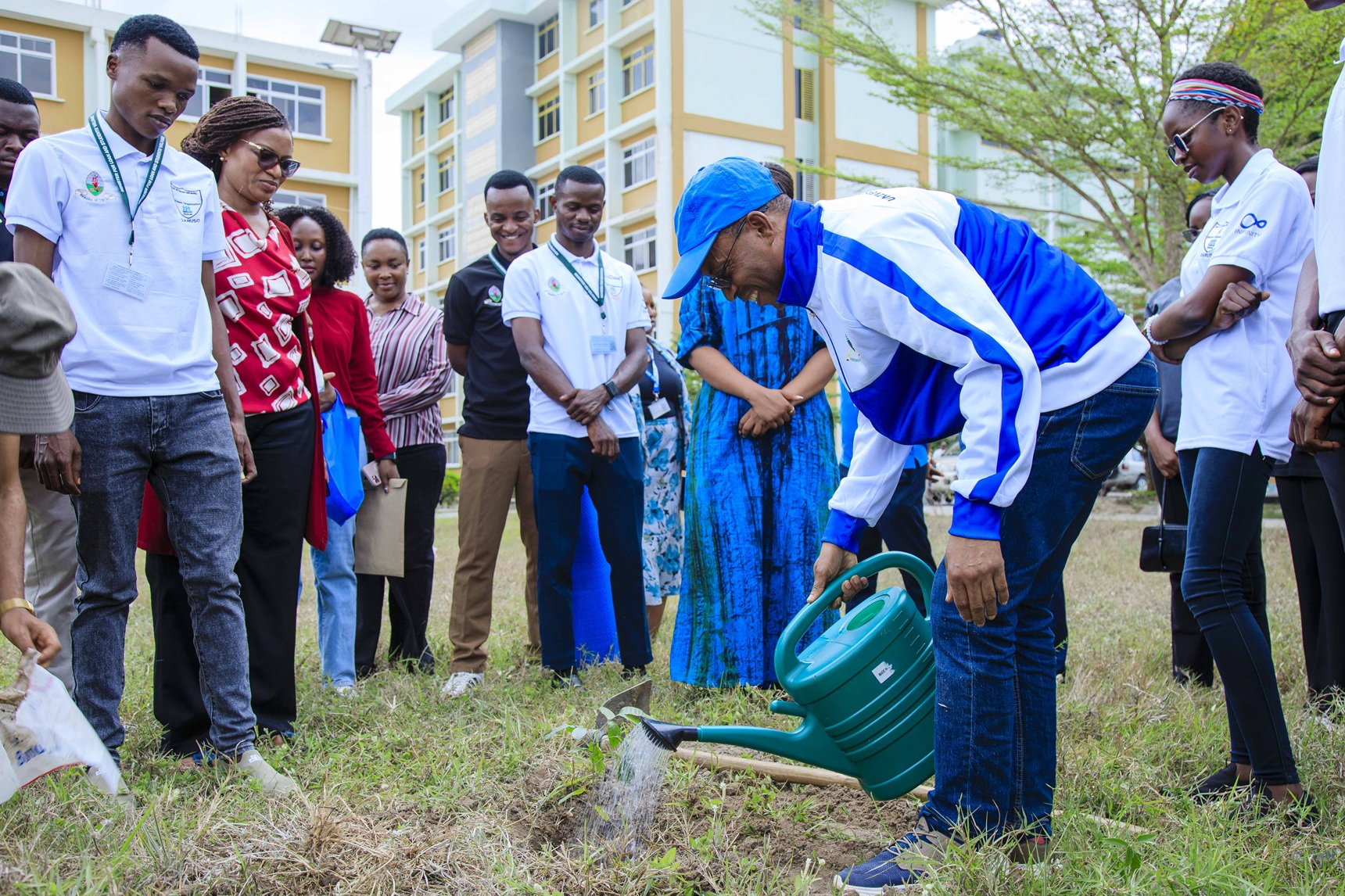
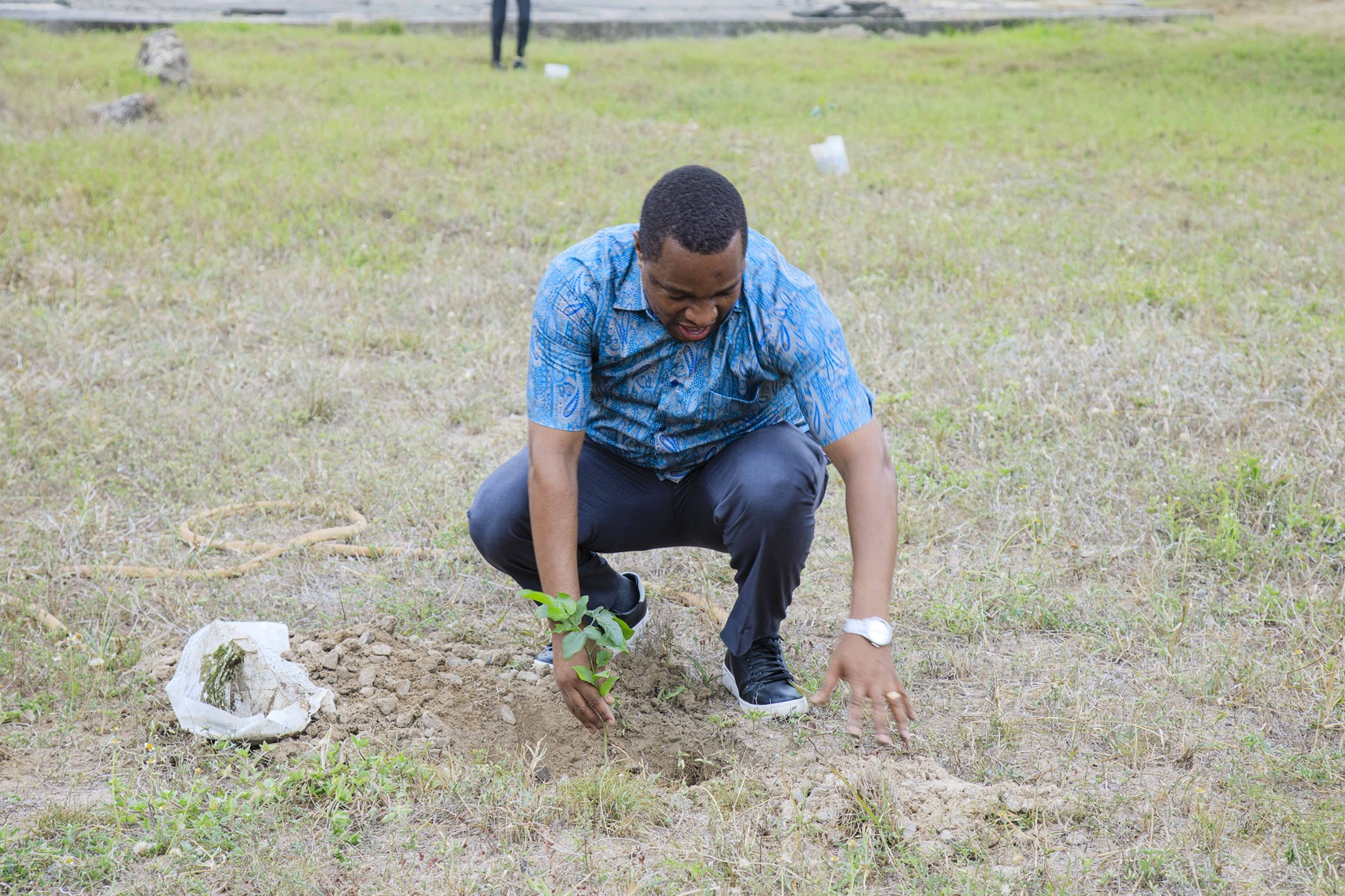
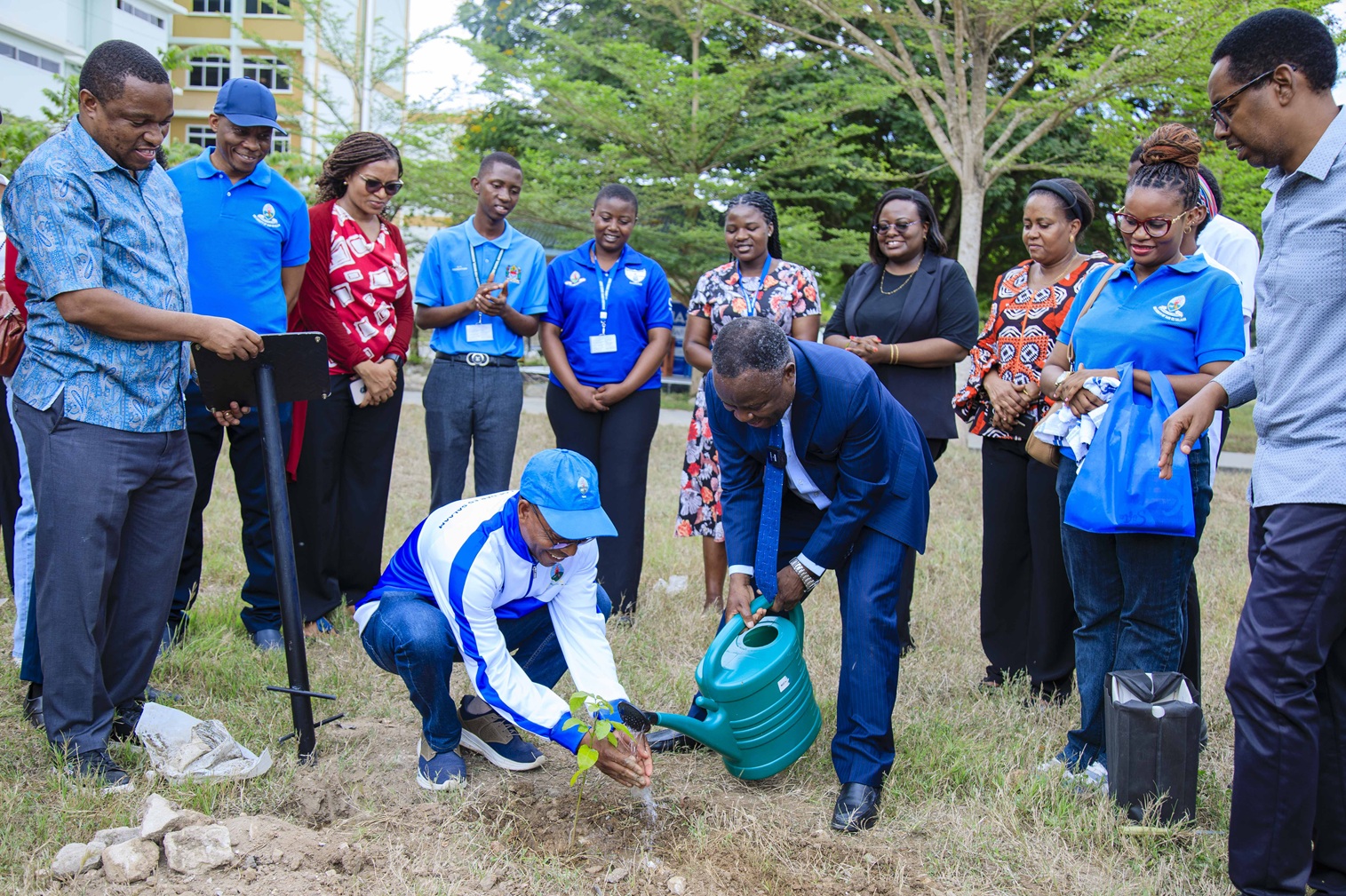
As the University of Dar es Salaam (UDSM) celebrates 65 years of academic excellence and service to society, its anniversary tree-planting exercise has delivered a message that extends beyond the celebrations: preserving the environment is part of safeguarding the University’s legacy for generations to come.
Led by Vice Chancellor Prof. William A. L. Anangisye, the exercise brought together the University’s anniversary celebrations and its commitment to environmental conservation, highlighting the importance of protecting the green campus and biodiversity that form part of UDSM’s identity.
Speaking during the event, Prof. Anangisye reflected on the University’s contribution to Tanzania and Africa, urging the University community to appreciate its achievements while continuing to pursue greater impact through research, innovation and service to society.
“The University of Dar es Salaam is here for the development of our nation and for the development of Africa. Our influence is significant, and we should never underestimate the contribution we have made to the development of our country,” he said.
He noted that UDSM’s influence extends beyond its lecture halls, with its graduates serving in leadership and professional roles across Tanzania and the wider African continent. He also emphasised the need to strengthen research and innovation, particularly by commercialising research outputs so that their benefits reach more people.
The tree-planting exercise, he said, symbolised the University’s continuing growth and its aspirations for the decades ahead, linking the achievements of the past 65 years with a responsibility to build a sustainable future.
Protecting the Green Legacy
The Deputy Vice Chancellor for Research, Prof. Nelson Boniface, said environmental conservation was essential to preserving the natural features that make the University’s campus distinctive.
“Today, as we celebrate the University’s anniversary, we are planting trees to preserve our environment and sustain its greenery. This is also a message that, in the years ahead, the University should maintain, and possibly surpass, its current standards,” he said.
Prof. Boniface highlighted the role of trees in absorbing carbon dioxide and supporting environmental protection, while noting that conserving natural vegetation helps sustain biodiversity.
He explained that the tree species selected for the exercise were informed by research conducted by Botany experts, with emphasis on indigenous species suited to the local environment.
The approach reflects the importance of combining environmental action with scientific knowledge to ensure that tree planting supports local ecosystems and contributes to long-term conservation.
For a university whose work encompasses teaching, research and innovation, the exercise also demonstrated how scientific expertise can inform practical decisions that benefit the institution and its surrounding environment.
Indigenous trees, lasting environmental benefits
The Head of the Department of Botany, Prof. Samora Macrice Andrew, urged the University community to prioritise indigenous tree species when undertaking planting initiatives.
“Let us not just plant any trees. We should identify and plant indigenous species because they are better suited to our environment and support insects and biodiversity in general,” he said.
Prof. Andrew explained that trees play essential roles in sustaining life, including releasing oxygen, helping regulate environmental conditions and providing resources such as timber and fuel.
He called on members of the University community and the wider public to take collective responsibility for planting and protecting trees, emphasising that environmental conservation requires consistent action beyond anniversary events.
His message highlighted an important distinction: planting trees is only the beginning. Selecting appropriate species and ensuring that they survive and mature are essential to achieving lasting environmental benefits.
By drawing on botanical expertise to guide species selection, UDSM is linking its research capacity with the practical task of protecting its natural environment.
A growing university, a greener future
Representing the Dean of the UDSM School of Law, Dr. Cecilia Ngaiza drew a parallel between the growth of a tree and the University’s development over the past 65 years.
“Just as a tree grows from a small plant into a mature tree, the University has grown significantly over the past 65 years. Our aspiration is to see it continue growing and achieve even more in the years ahead,” she said.
Dr. Ngaiza highlighted the historical significance of the School of Law as one of UDSM’s earliest academic units, noting that the anniversary offered an opportunity to reflect on the institution’s achievements and aspirations for the future.
Her remarks reinforced the symbolism of the exercise: just as trees require care and time to grow, sustaining an institution’s achievements requires continued investment, responsibility and commitment across generations.
As UDSM marks its 65th anniversary, the planting of trees serves as a reminder that institutional progress must go hand in hand with environmental stewardship.
The University’s legacy lies not only in the graduates it produces, the research it generates and its contribution to national development, but also in how it protects the natural environment entrusted to it.
The challenge now is to ensure that the trees planted today grow and flourish, providing environmental benefits for future students, staff and generations who will call the University’s campus home.