

-
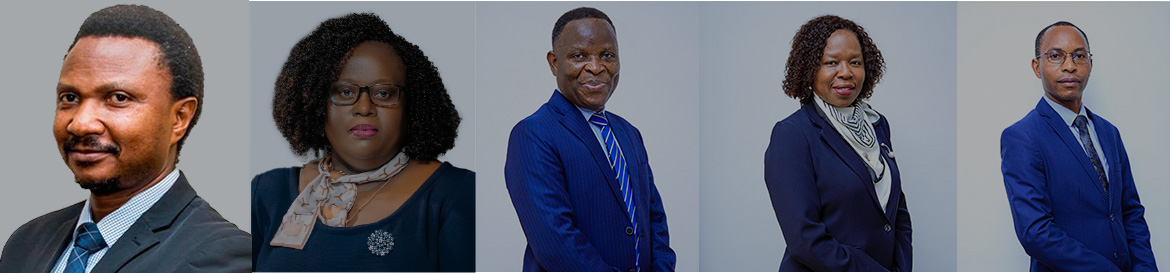 Get to know the dedicated professionals behind our success
 -

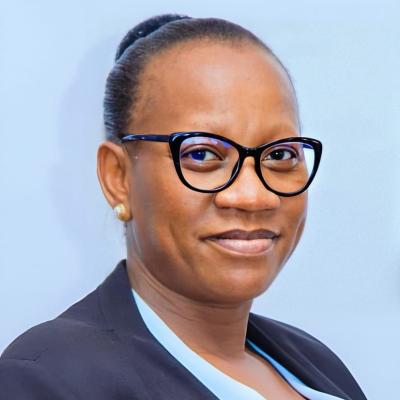
Prof. Sarah Ezekiel Kisanga
Biography
Prof. Sarah E. Kisanga is a full-time Associate Professor and the Director, Institute of Gender Studies at the University of Dar es Salaam, Tanzania. She holds a Doctor of Philosophy from Nottingham Trent University in the United Kingdom where she specializes in Inclusive Education. She has a Master of Arts degree in Applied Social Psychology specialized in counseling and a Bachelor of Education in Educational Psychology from the University of Dar es Salaam. She teaches, supervises, and conducts research in special and inclusive education, educational psychology, gender and general psychology.
Prof. Kisanga has made substantial contributions to the field of inclusive education through her involvement in research, consultancy services, and publications in peer-reviewed journals. Her research interests span a range of topics, including teaching pedagogies in inclusive settings, barriers to learning and participation in inclusive environments, the use of assistive technology for students with special educational needs, and coping strategies in inclusive settings. Notably, she played a pivotal role as a convener in the development of the UDSM Policy on Disability and Special Educational Needs. Furthermore, Prof. Kisanga has actively participated in curriculum development and reviews in special and inclusive education, both at postgraduate and undergraduate levels, both within and outside the UDSM.
Prof. Kisanga has published several research articles in local and international peer-reviewed journals and conducted peer reviews in local and international journals. Her research articles can be accessed at the following link: https://scholar.google.com/citations?user=vsvwdyUAAAAJ&hl=en
Research Interest
Inclusive Education
Special Education
Assistive Technology for Inclusive Classrooms
Educational Psychology
Gender Equity in Higher Education
General Education
Contacts
Email:
Projects
2021-2022 Participated in the study of School-based learning through Play Positive practices in Tanzania.
This project aimed to develop and implement LtP interventions in pre-primary and primary schools across the country.
2019- 2021 Researcher in the departmental research project titled: Implementation Research on the Satellite and INSET Models for Improved Equitable Access and Quality Early Learning in Tanzania, funded by UNICEF
2008 Participated in the research titled, The effect of visual materials on student teachers’ understanding of inclusive education, under PITRO project titled “Education for Learners with Disabilities”.
Publications
Kisanga, S. E., & Richards, G. (2018). Teaching pedagogies in Tanzanian inclusive educational settings: Do they respond to diverse needs? Voices from students with visual impairment. British Journal of Visual Impairment, 36(3), 216–226. DOI: 10.1177/0264619618780914
Kisanga, S. E. (2019). Barriers to Learning faced by students who are Deaf and Hard of Hearing in higher education institutions in Tanzania. Paper in Education and development 37(2), 201 – 218
Kisanga, S. E. (2019) ‘‘It is not our Fault. We are the Victims of the Education System’’: Assessment of the Accessibility of Examinations and Information for Students with Visual Impairment in Tanzania. The Journal of the International Association of Special Education, 19(01), 15-26
Wakuru, M., Kisanga, S. E & Vuzo, M. (2020). Teachers’ knowledge and perception on the inclusion of pupils with moderate deaf-blindness in primary school classrooms: Implications for instructional practices. Mkwawa Journal of Education and Development, 4(1); 21-25 DOI: https://doi.org/10.37759/mjed.2020.4.1.2
Kisanga, D. H & Kisanga, S. E. (2020). Access of assistive technology among students with visual impairment in higher education institutions in Tanzania: Challenges and coping mechanisms. University of Dar es Salaam Library Journal, 15 (2), 137-151
Matiba, F.M, & Kisanga, S.E, (2021). Student-Mothers’ experience in Tanzania Higher Education Institutions: Motivational Factors and Challenges, Journal of Education Humanities and Sciences, 10(2),80-97 https://jehs.duce.ac.tz/index.php/jehs
Kisanga, S.E & Matiba, F.M. (2021). Coping strategies student-mothers employ in pursuing higher education studies in Tanzania: A qualitative study, Current Psychology, DOI: https://doi.org/10.1007/s12144-021-01770-z
Kisanga, S. E. (2022). Coping with educational barriers in Tanzanian inclusive education settings: evidence from students with sensory impairment. Current Psychology, 41(7), 4750-4759. https://doi.org/10.1007/s12144-020-00977-w.
Kisanga, S. E. & Kisanga, D. H. (2022). The role of assistive technology devices in fostering the participation and learning of students with visual impairment in higher education institutions in Tanzania. Disability and Rehabilitation: Assistive Technology, 17(7), 791-800 https://doi.org/10.1080/17483107.2020.1817989
Manini, W., Kisanga, S.E & Vuzo. M. (2023). Teachers Pedagogical Practices and Inclusive Education. A case of Pupils with moderate deaf blindness in Tanzania. Journal of Adult Education 24, 183-207
Mushi, A. P., Kafanabo E. J. & Kisanga, S. E. (2023). Parents' experiences in provision of social support to children with intellectual impairment in Tanzania inclusive primary education settings. Paper in Education and Development: Special Issue on Inclusive & Special Education, 41 (1), 69-85.
Ndunguru, E. N & Kisanga, S.E. (2023). Challenges encountered by teachers in supporting children with autism in primary schools in Tanzania, Paper in Education and D.evelopment: Special Issue on Inclusive and Special Education 41(1), 55-68
Anselimus, S. M., & Kisanga, S. E. (2024). The involvement of primary school pupils with visual impairment in extracurricular activities: Teachers’ perceptions and practices in Tanzania. British Journal of Visual Impairment, https://doi.org/10.1177/02646196241250202
Kisanga, S.E. (2024). Social barriers faced by students with sensory impairment in higher education in Tanzania. British Journal of Special Education. https://doi.org/10.1111/1467-8578.12549
Matiba, F.M, & Kisanga, S.E, (2024). Serving Students with Special Needs: Palpable Lessons from University of Dar es Salaam’s 40-years Sustained Experience. Journal of Research in Special Educational Needs. https://doi.org/10.1111/1471-3802.12725
Kisanga, S. E., & Foya, Z. O. (2024). Teachers' conceptualisation of the learning needs of pupils with cochlear implants in Dar es salaam's inclusive primary schools, Tanzania. Papers in Education and Development, 42(2).
Kisanga, S. E. (2025). Attitudes towards the use of high-tech assistive technology among students with visual impairment in Tanzanian higher education institutions. Disability and Rehabilitation: Assistive Technology, 1-7. https://doi.org/10.1080/17483107.2025.2475145
Kisanga, S. E. (2025). Enhancing High-tech Assistive Technology Use for Learning among Students with Visual Impairment in Tanzania’s Higher Education. University of Dar es Salaam Library Journal, 20(1), 226-239.
Kisanga, S. E., & Foya, Z. O. (2025). Enhancing support for pupils with cochlear implants in Tanzania’s inclusive primary schools: a wake-up call for a strong collaborative approach. Cochlear Implants International, 1-16. DOI: 10.1080/14670100.2025.25389812.
Kisanga, S. E. (2025). Students’ Preference for the Use of Assistive Technology in Higher Education in Tanzania: Does Gender Make a Difference? Disability and Rehabilitation: Assistive Technology.1-11 https://doi.org/10.1080/17483107.2025.2580568
Kisanga, S. E., & Masawe, C. (2025). Becoming Active Researchers as Women in Tanzania’s Higher Education Institutions: What Does it Take?. In: Mutanga, O., Mkwananzi, F. (Eds) Navigating Complex Research Terrains: The Experiences of Social Researchers in the Global South (pp. 45-72). Cham: Springer Nature Switzerland. https://doi.org/10.1007/978-3-032-03642-1_3
Kisanga, S. E., & Masawe, C. (2026). Bridging the Gender Gap in Academic Publication in Tanzanian Higher Education: Does Mentorship Matter? In: Busby, S. Raphael, C and Lekule, C. (Eds), Contemporary Educational Management in East Africa Tackling Challenges of Inclusion, Leadership, and Digital Integration. UK: Routledge. https://doi.org/10.4324/9781003679226-13?urlappend=%3Futm_source%3Dresearchgate.net%26utm_medium%3Darticle